


Best Answer: How Often Should You Clean Your Roof?
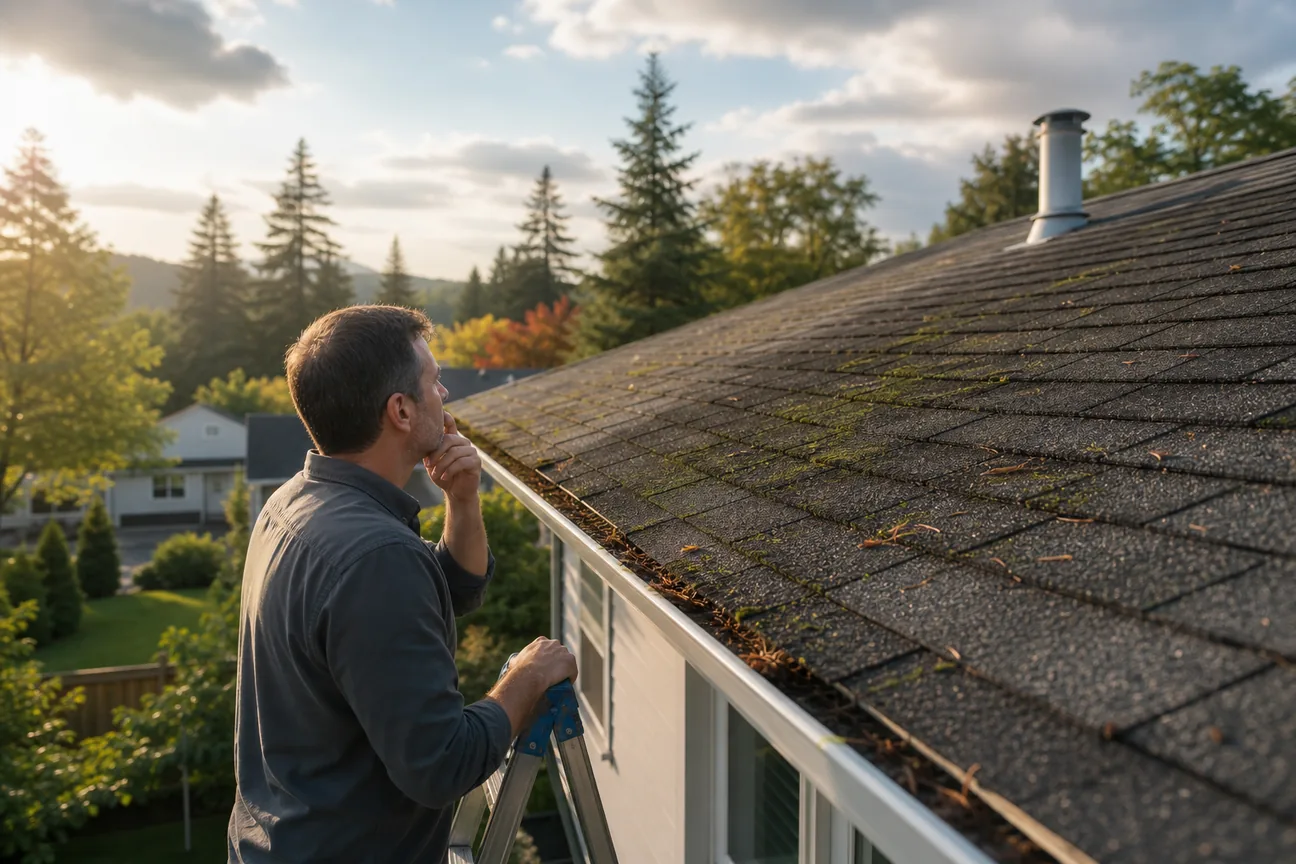
Most Central Florida roofs should be inspected at least once a year, while actual cleaning may be needed anywhere from every 1–3 years depending on the roof material, shade, tree cover, moisture, and visible growth. Roof cleaning schedules aren't one-size-fits-all. Heavy shade can bring algae and organic growth back faster, while a roof in full sun may stay clean for several years.
Here are practical roof cleaning and inspection guidelines for asphalt shingles, tile, metal roofs, DIY homeowners, and property managers.
Table of Contents
1. Performance Pressure Wash
Performance Pressure Wash is our roof soft washing service for Central Florida homes and commercial properties. It's designed for homeowners and property managers who want a professional cleaning plan without guessing at the right interval.
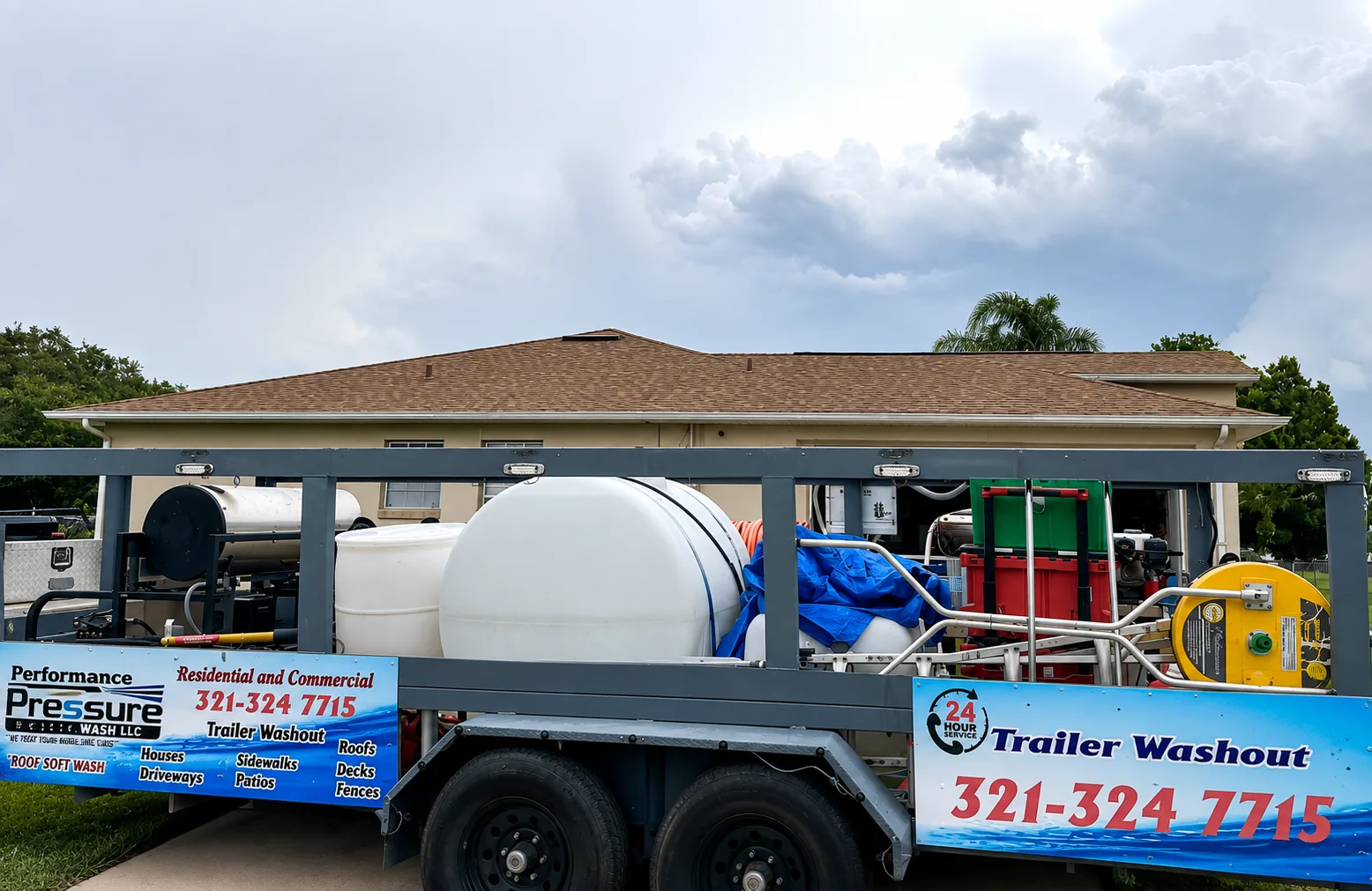
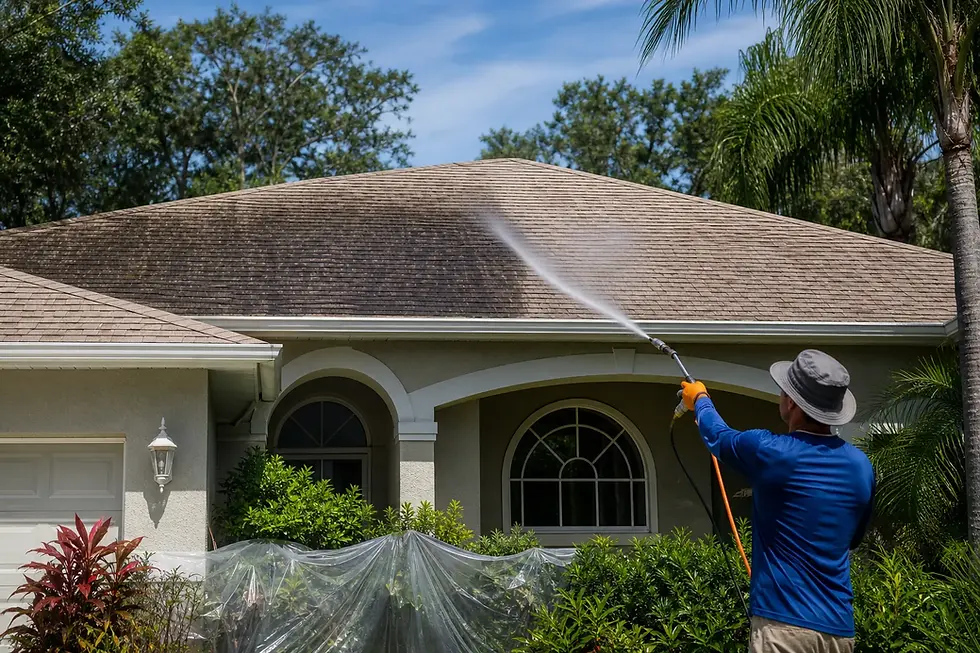
We inspect the roof material, pitch, shade, tree cover, and visible growth before recommending a cleaning schedule. Our low-pressure soft wash uses cleaning solutions to treat algae, mildew, moss, and other organic growth. Water pressure remains low, so shingles aren't subjected to the force associated with high-pressure washing.
We also take precautions to protect landscaping and nearby surfaces during treatment. After the solution has had time to work, we rinse the roof and surrounding areas carefully. Pricing varies based on roof size, pitch, material, access, and buildup, so a written estimate is the best way to compare the scope and cost of service.
Our main recommendation is a routine maintenance approach rather than a blanket promise that one cleaning will keep a roof clean for a specific number of years. We help homeowners plan service based on how quickly growth returns.
For many Central Florida asphalt shingle roofs, that means checking the roof every year and cleaning when dark streaks or organic growth return. Our roof cleaning frequency recommendations can help you establish a starting point.
When it's time for professional roof cleaning, our roof soft washing service is designed for Central Florida homes and businesses.
2. Asphalt Shingle Roofs in Heavy Shade: Inspect Every 6 to 12 Months
Heavy-shade asphalt shingles need closer monitoring. If trees keep the roof damp after rain, inspect it every six to twelve months and expect cleaning roughly every twelve to eighteen months when growth returns.
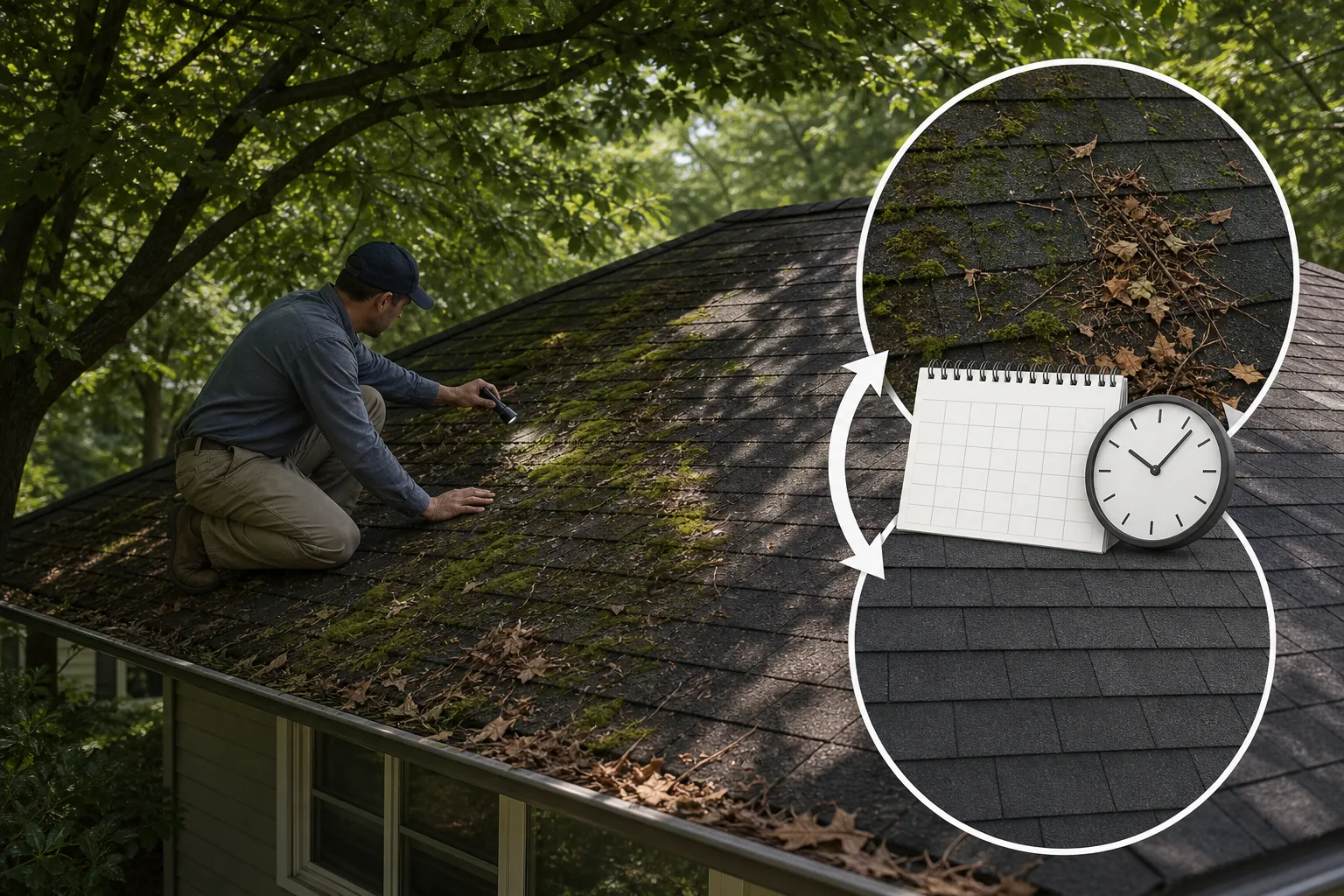
Dark streaks often come from Gloeocapsa magma, a blue-green algae that makes black marks on shingles. Moss is a different problem. It holds moisture and can lift shingle edges as it grows.
High-pressure cleaning can cause granule loss. Those small granules help protect the shingle surface. Look in valleys and beneath tree limbs first, since these spots stay wet the longest.
Don't wait for thick moss. Once growth is easy to see, the roof may have been damp for months. Trim branches when possible, keep gutters open, and ask for a low-pressure treatment that protects the roof surface.
3. Asphalt Shingle Roofs in Partial Shade: Check Annually
Partial-shade asphalt roofs usually need an annual inspection, with cleaning around every one to two years when growth is present.
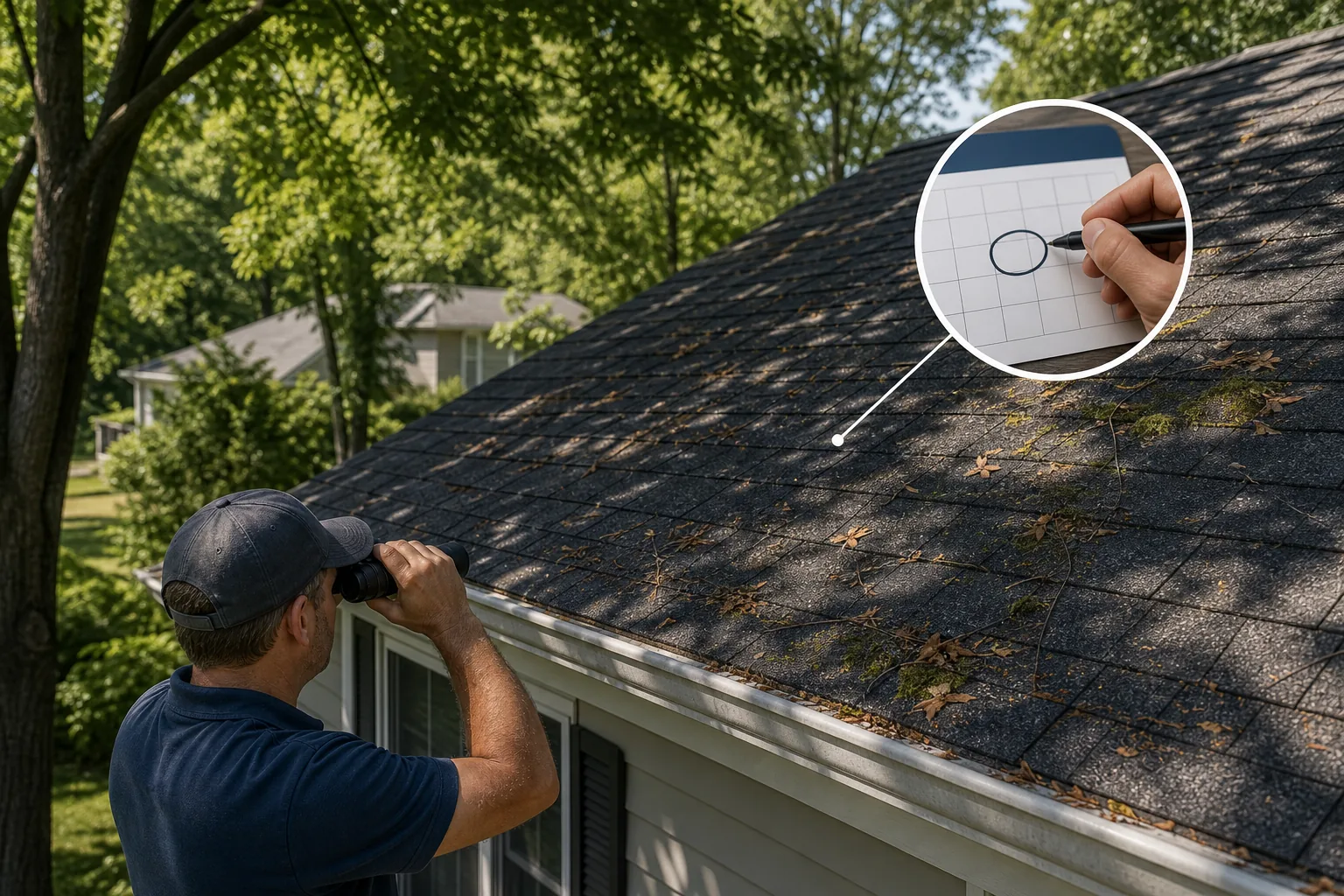
Shade on one roof plane can change the maintenance schedule even when the rest of the roof looks clean. Nearby trees, slow drainage, and accumulated leaves can create areas that stay damp longer.
Watch for black streaks, green growth, moss, or unusual amounts of shingle granules collecting in the gutters. Excessive or unusual granule loss can be a reason to have the roof inspected rather than simply treating the roof for stains.
If only one slope shows visible growth, targeted cleaning may make more sense than treating the entire roof at the same interval. However, the full roof should still be inspected because stains and growth can develop around vents, skylights, valleys, and other areas that aren't immediately visible from the ground.
Annual inspections can also help distinguish algae from rust runoff, tannin stains, or other discoloration. Identifying the cause helps determine the appropriate treatment.
4. Asphalt Shingle Roofs in Full Sun: Clean When Signs Appear
Full-sun asphalt shingles may go two to three years between cleanings when they remain free of visible growth, although annual visual inspections are still a good maintenance practice.
Sun exposure helps roof surfaces dry faster, which can make conditions less favorable for algae and moss. However, full sun doesn't make a roof maintenance-free. Florida rain, pollen, wind-blown debris, and nearby vegetation can change conditions over time.
Clean sooner if you see dark streaks, uneven discoloration, moss, organic growth, or accumulated debris. Cracked, curled, or missing shingles are signs that the roof may need inspection or repair rather than cleaning alone.
A clean roof can also have more uniform surface reflectivity when dark biological growth is removed. Any potential energy benefit should be considered a secondary effect, not a replacement for proper insulation, ventilation, or roof maintenance.
For a closer look at common stain sources, we explain why roofs show black streaks and how to distinguish algae from other types of discoloration.
If you're looking for roof cleaning in Orlando, our local guide explains what to expect from professional roof soft washing and how Florida conditions can affect your maintenance schedule.
5. Metal Roofing: Inspect at Least Twice a Year
Metal roofing generally resists moss and algae better than many shingle roofs, but it can still collect dirt, pollen, salt film, and storm debris. In humid Florida conditions, inspect metal roofing at least twice a year and after significant weather events.
When possible, use a ground-level visual inspection rather than walking on the roof. Look for loose fasteners, scratches, dents, lifted panels, damaged flashing, and failed sealant. A roof wash can remove surface grime, but it won't repair a loose panel or damaged flashing.
Cleaning with water and a mild, compatible solution may be sufficient for light soil. The cleaning method should be appropriate for the roof's coating and finish. Excessive pressure can damage finishes, while inappropriate chemicals can affect painted surfaces or nearby landscaping.
Metal roofs may require less frequent biological cleaning than some other roofing materials. They still benefit from routine inspections because storm damage and coating problems can become more important than visible dirt.
6. Tile Roofs: Inspect Yearly for Algae, Moss, and Lichen
Tile roofs should receive a yearly inspection for algae, moss, lichen, broken tiles, and drainage problems. Cleaning may fall on a one-to-three-year cycle depending on shade, tree cover, moisture, and soil accumulation.
Clay and concrete tiles can require different cleaning methods than asphalt shingles, but that doesn't mean any pressure level is appropriate. Water directed beneath tiles can potentially reach underlayment or flashing, and walking on tile can crack or damage individual pieces.
Moss and lichen deserve early attention. Lichen can firmly attach to surfaces, while moss can retain moisture around tile edges and in shaded areas. Some treatments may require time to work before dead growth loosens.
Ask the cleaning contractor how the process protects the tile, gutters, landscaping, windows, and painted walls. A properly cleaned tile roof should still have intact tiles and functioning drainage when the work is complete.
7. DIY Roof Cleaning: Know the Risks
DIY roof cleaning should generally be limited to ground-level inspection and low-risk debris removal. Roof access introduces significant fall and roof-damage risks, particularly on steep, wet, fragile, or elevated surfaces.
Never climb onto a wet or slippery roof. Avoid working near power lines, and stop work during rain or unsafe wind conditions.
Do not use a pressure washer on asphalt shingles. High pressure can remove protective granules and may force water beneath shingle tabs.
For ground-level maintenance, homeowners can remove loose debris when it can be done safely without climbing onto the roof. Chemical treatments require additional precautions. Protect landscaping, keep pets and people away from treatment areas, follow the product label, and rinse as directed.
If the roof is steep, high, slippery, fragile, or heavily covered in moss or other growth, hiring a licensed and insured professional is the safer option.
Our safe shingle cleaning guide explains why low pressure and surface protection matter.
8. Professional Soft Washing: The Surface-Safe Choice
Professional soft washing is a common approach for stained asphalt shingle roofs because it combines low water pressure with a cleaning solution. The goal is to allow the treatment to address organic growth without relying on high pressure to remove it.
For algae and other organic growth, the treatment needs appropriate coverage and sufficient dwell time. The roof can then be rinsed using a low-pressure method appropriate for the roofing material. Proper rinsing helps remove loosened soil and treatment residue from the roof and surrounding surfaces.
Every chemical treatment should be handled according to the product label and applied with appropriate protection for landscaping and nearby surfaces. Plant protection, runoff management, and careful rinsing should be part of the cleaning plan.
Soft washing won't repair a failed roof. It also won't remove every rust, soot, tannin, or other type of stain using the same treatment. A reputable contractor should explain what the cleaning process is expected to address before work begins.
9. Roof-and-Gutter Maintenance: Combine Related Exterior Care
Roof maintenance works better when gutters and downspouts can move water properly. Clogged gutters can hold wet leaves against the roof edge and send overflow toward fascia, siding, landscaping, or the home's foundation.
In Central Florida, homes with heavy tree cover may need gutter inspections every one to two months during periods of heavy leaf drop. Homes with little tree cover may need only one or two gutter cleanings per year. Inspecting after major storms is also a good practice.
Look for water spilling over the gutter, sagging sections, plant growth, or nests. These signs can indicate a drainage problem that should be addressed before the next major rainfall.
When we plan roof service, we check visible roof-edge and drainage areas. Combining related exterior maintenance can reduce repeat setup time for homeowners and property managers, but roof and gutter work still require separate safety considerations.
10. Preventive Roof Maintenance: Use Strips and Routine Inspections
Preventive maintenance can help slow the return of organic growth, but it doesn't replace inspections or cleaning.
Start with practical maintenance such as trimming branches when appropriate, removing accessible debris, keeping gutters clear, and scheduling a yearly roof inspection.
Zinc or copper strips may help discourage algae and moss on some roofing systems, but they should only be considered when compatible with the roofing material and manufacturer requirements. Installing strips on an existing asphalt roof may require exposed fasteners or disturbing the shingle seal, which can create additional risks.
Keep a simple record of the last roof cleaning, the roof material, which slopes receive shade, and any repairs or concerns noted during inspections. This can help homeowners, HOAs, and property managers identify patterns and plan maintenance before growth becomes widespread.
Key Takeaway: A maintenance plan is better than a promise of long-term stain protection. Inspect your roof yearly, shorten the inspection cycle when shade and moisture are significant, and clean when visible growth returns.
Roof Cleaning Schedule Comparison by Material and Condition
Use this table as a starting point rather than a fixed rule. Climate, roof pitch, tree cover, storm exposure, drainage, and the condition of the roof can move the schedule earlier.
Roof or condition | Starting inspection schedule | Common cleaning trigger | Best decision |
Asphalt shingles, heavy shade | Every 6–12 months | Dark streaks, moss, damp debris | Plan cleaning around 12–18 months, sooner if growth returns |
Asphalt shingles, partial shade | Yearly | Stains on shaded slopes or visible growth | Review the roof each year and treat affected areas early |
Asphalt shingles, full sun | Yearly visual check | Visible streaks, debris, or storm residue | Cleaning may wait 2–3 years when the roof stays clear |
Metal roofing | Twice yearly | Storm debris, dirt, loose fasteners, coating concerns | Inspect after major weather and use a compatible cleaning method |
Tile roofing | Yearly | Algae, lichen, moss, cracked tiles, blocked valleys | Use a tile-appropriate process and avoid unnecessary foot traffic |
Heavy tree cover and clogged gutters | After storms and during leaf drop | Overflow, wet leaf piles, plant growth in gutters | Pair gutter care with a roof inspection |
Cost depends on roof size, access, pitch, material, and buildup. A cheap quote that relies on damaging pressure isn't necessarily a good value. Ask for a written scope that explains the cleaning method, plant protection, rinse plan, and what happens if the inspection finds roof damage.
FAQ
How often should you clean your roof in Florida?
Most Florida roofs benefit from an annual inspection, while actual cleaning may fit a one-to-three-year cycle depending on the roof material and conditions. Shaded asphalt shingles may need treatment around every twelve to eighteen months when growth returns. Full-sun roofs may go two to three years if they remain free of streaks and debris. Storms, trees, roof age, moisture, and drainage can shorten that interval.
What are the signs that a roof needs cleaning?
Dark streaks, green growth, moss, lichen, leaf buildup, and uneven discoloration are common signs. Dark marks on asphalt shingles are often associated withGloeocapsa magmaalgae. Unusual amounts of shingle granules in the gutters may indicate roof wear, so pair that observation with a roof inspection rather than assuming the roof simply needs cleaning.
Is soft washing safe for asphalt shingles?
Soft washing is generally considered a safer approach for asphalt shingles than high-pressure washing because it relies on low water pressure and a cleaning solution rather than force. The cleaning process should include appropriate plant protection, sufficient treatment time, and careful rinsing. High pressure can remove protective granules and may force water beneath shingle tabs.
Can I clean my roof myself?
Homeowners can perform some ground-level inspection and safe debris removal, but roof access presents significant risks. Wet shingles, steep slopes, ladders, chemicals, and power lines can make roof cleaning dangerous. If the roof is high, steep, slippery, fragile, or heavily covered in organic growth, a licensed and insured professional is the safer choice.
Should roof cleaning include gutter cleaning?
Roof cleaning should be accompanied by a gutter and drainage check because blocked gutters can keep roof edges wet and send overflow toward the home. Homes under heavy tree cover may need gutter service more frequently during periods of heavy leaf drop. Every home should also be checked after major storms.
Does a clean roof improve energy efficiency?
A clean roof can reflect sunlight more evenly when dark algae and organic growth no longer cover portions of the surface. That may support more uniform heat performance during hot weather, but the effect should be considered a possible secondary benefit. Roof cleaning does not replace proper attic ventilation, insulation, or necessary roof repairs.
For most Central Florida homes, we recommend starting with a yearly roof inspection and cleaning when visible growth returns. Homes under heavy tree cover may need more frequent attention.
If you're seeing dark streaks, algae, moss, or organic buildup on your roof, request a free estimate from Performance Pressure Wash and we'll help you determine an appropriate cleaning approach based on your roof's material, condition, and exposure.

Comments